



Homeware
How to Care for Handmade Ceramic Mugs, Bowls and Vases: A Seasonal Checklist
September 17, 2026

There is a particular pleasure in drinking coffee from a mug that someone threw on a wheel, or eating soup from a bowl with a thumbprint still faintly visible in the glaze. Handmade ceramics are made to be used, not admired from a shelf. But they do ask for a little more thought than the mass-produced stack at the back of the cupboard.
The good news is that the care involved takes seconds, not hours. Most problems — cloudy glazes, hairline cracks, a favourite bowl that splits after a spoonful of hot stew — come from a handful of avoidable habits. Here is how to build those habits into your week, your month and your year.
Know What You Are Dealing With
Before you change anything, work out what kind of pot you own. Earthenware, stoneware and porcelain behave quite differently, and the finish matters as much as the clay.
- Earthenware is fired at lower temperatures, so it stays slightly porous. It usually needs a glaze to be watertight and is the most vulnerable to thermal shock.
- Stoneware is dense, sturdy and the standard for everyday mugs and bowls. It copes well with dishwashers, though the glaze still benefits from care.
- Porcelain is fine, hard and often thin-walled. Strong, but fragile at the rim and handle.
- Unglazed or partially glazed pieces — rustic cups, planters, some tea bowls — should never go in a dishwasher and will darken or stain with use. That patina is often the point.
If a maker gave you a card with care notes, keep it. If not, a quick tap with a fingernail tells you a lot: a bright ring suggests a well-fired, dense body, while a dull thud can point to lower firing or a hidden crack.
Daily Habits That Prevent Most Damage
Almost all ceramic casualties happen in the first ten minutes after a meal. A few small shifts in routine will save you a great deal of grief.
- Scrape, then rinse, then wash. Leftover food and tea tannins bond to glaze surprisingly quickly. Rinse while the residue is still soft rather than leaving it to dry overnight.
- Wash by hand where you can. Warm water, a soft sponge and a mild washing-up liquid are ideal. Skip abrasive pads and gritty cream cleaners, which dull gloss glazes and wear away decoration.
- Stack with something between. A felt pad, a square of kitchen paper or a thin cork mat stops rims grinding against each other. Nest bowls rather than stacking them tightly.
- Dry upside down on a rack. Trapped water collects in the foot ring, where it can sit against the clay and encourage staining or, in cold weather, freezing damage.
- Deal with metal marks early. Grey streaks from cutlery are usually transferred metal, not scratches. A paste of bicarbonate of soda and water, applied gently with a cloth, lifts most of them.
One habit worth breaking: pouring boiling water straight into a cold pot. Let the kettle settle for a moment, or warm the mug with a splash of hot water first. The same goes for a cold bowl going into a hot oven, or a hot dish meeting a cold worktop.
Monthly: A Closer Look and a Deeper Clean
Once a month, set aside twenty minutes to give your ceramics a proper once-over. It is also a good moment to reassess what you actually use.
Check for cracks and crazing
Crazing is the fine web of lines that sometimes appears in a glaze. It is not automatically a fault, and many potters create it deliberately. But if a previously smooth glaze suddenly develops a network of lines, or if the lines darken over time, the piece may be absorbing liquid through them. Retire anything with a crack you can feel with a fingernail — that is a structural weakness, not a surface mark.
Tackle stains properly
Tea, coffee, turmeric and tomato all leave their mark eventually. For light staining, a soak in warm water with a spoonful of bicarbonate of soda usually does it. For stubborn interior stains on a white glaze, a diluted oxygen-based bleach soak, following the product instructions and rinsing thoroughly afterwards, will lift most discolouration. Avoid chlorine bleach on coloured or hand-painted glazes, and never mix cleaning products.
Give handles and rims some attention
These are the thinnest, most stressed parts of any piece. Run a thumb along the rim and handle of each mug. A tiny chip can be smoothed with fine wet-and-dry paper if it is only glaze, but if the clay itself is exposed, the piece is best kept for decoration rather than daily use — exposed earthenware clay can harbour bacteria.
Seasonal Routines Worth Keeping
Spring
A good time for a full audit. Take everything off the shelf, wash and dry it, and decide what genuinely earns its space. Rotate pieces you have stopped using into a cupboard rather than leaving them to gather dust on an open shelf, where cooking grease settles into glazes and is a nuisance to remove.
Summer
Garden dining puts ceramics through more than the kitchen does. Vases holding cut flowers should be emptied and rinsed every few days, as stems and standing water stain the interior fast. If you use jugs for iced drinks, avoid filling a room-temperature piece straight from the freezer; let the ice melt a little first.
Autumn
As the oven and slow cooker come back into use, remember that most handmade ceramics are not ovenproof unless the maker says otherwise. Serving dishes are usually fine for a warm kitchen, but a cold ceramic dish going into a hot oven is a classic way to lose a favourite piece to thermal shock.
Winter
The riskiest season. Cold mugs plus boiling water equals stress, so warm them first. Never leave ceramics in an unheated shed, garage or conservatory, because any residual moisture in the clay can freeze and expand, causing hairline cracks that only show up months later. And if a piece does crack, stop using it for food or drink.
A Short Note on Dishwashers
Many well-fired stoneware mugs survive a dishwasher perfectly well, and makers often say so. The caveats are worth knowing: high heat and long cycles are hard on gilding, lustre and hand-painted decoration, and detergents can gradually dull a satin or matte glaze. If a piece is precious, wash it by hand. If it is your everyday mug and the maker approves, the dishwasher is fine.
The Practical Summary
Rinse promptly, wash gently, dry upside down and stack with a barrier. Once a month, check rims and handles, and lift any stains before they set. Across the year, keep ceramics away from sudden temperature changes and out of freezing rooms.
Do all of that and your handmade pieces will develop the patina that only comes with use — a slight softening at the rim, a deepening of colour, a history in the glaze. That is not damage. That is the whole reason to choose handmade in the first place.
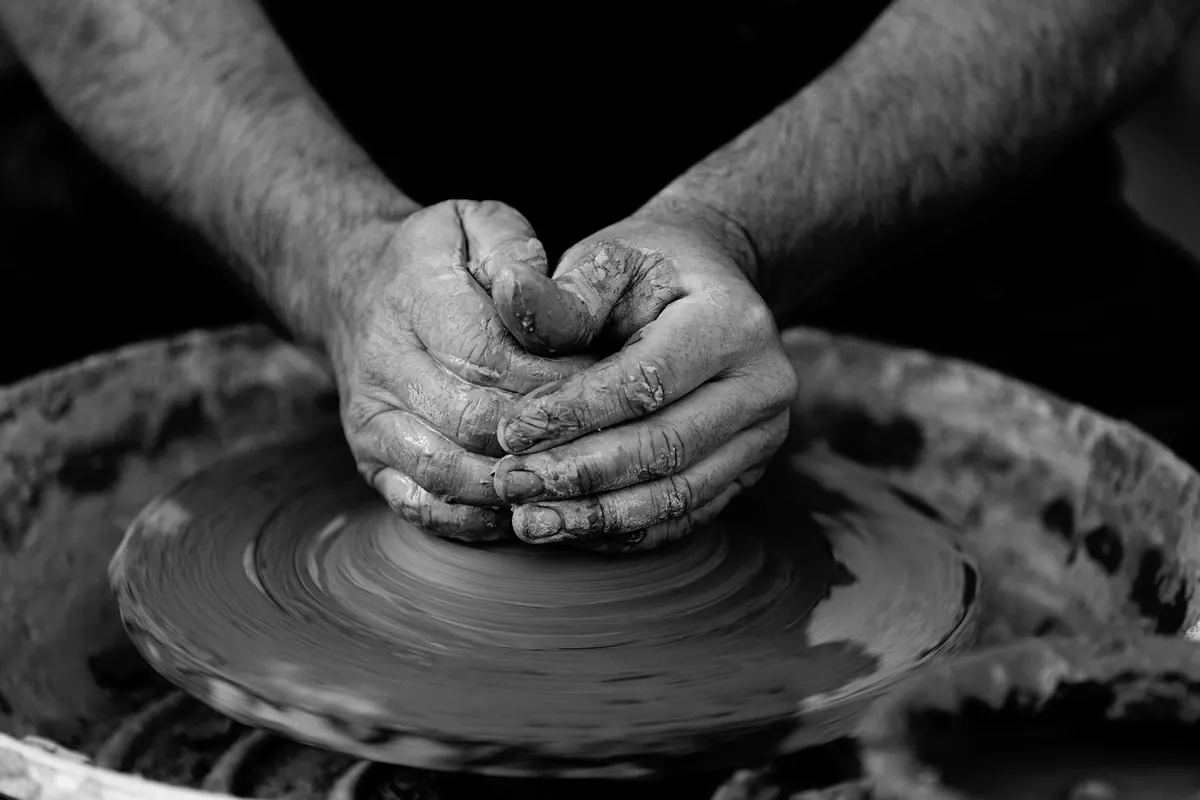
Photo: Hans / Pixabay
Related posts
More stories you’ll love reading