

Most people judge a stall by its sign, its lighting or the price on the tag. A better approach is to pick something up and let your hands do the reading. Craft is a long chain of small decisions — how a joint is cut, how a rim is finished, how a thread is tied off — and those decisions leave evidence you can feel in a few seconds. Here is what to check before you buy, whether you are at a farmers' market, a craft fair or a weekend market in a converted mill.
Start With Your Hands, Not Your Eyes
Weight is the first clue. A wooden board that feels light in the hand is often thin stock; a bowl that feels unexpectedly heavy may be overbuilt, but at least the maker was not skimping. Turn the piece over. Undersides are where shortcuts live: rough sanding, glue squeeze-out, a foot left sharp enough to scratch a table.
Run your fingertips along every edge, slowly. Then set the item on a flat surface and press each corner in turn. If it rocks, put it down. Small wobbles rarely fix themselves, and a mug that spins on a saucer will still annoy you in five years' time. Pick up two similar pieces if the maker has them. One will sit better, balance better, feel more resolved. That one was probably made later in the run.
Joinery: Check the Corners, the Back and the Drawers
A good joint fits without filler. Dovetails should be tight enough to need a gentle tap to assemble, with no pale wedges of wood filler or sawdust-and-glue paste trying to hide gaps. Run a fingernail across the join; if it catches on a ridge, the pieces were not planed flush.
Now look at the back of the piece, or the inside of the box. Some makers finish the face beautifully and leave the rear rough, which is defensible on a wall-hung item and lazy on a freestanding one. Continuous grain across a drawer front, or panels matched so the figure flows from one door to the next, shows someone was thinking ahead rather than cutting whatever came off the pile.
Drawers and moving parts
Pull a drawer right out and push it back. It should glide with a little resistance, not rattle, not need a shove. Wooden runners should feel waxed rather than gritty. Open and close it three times — that is roughly a year of use compressed into ten seconds.
Glazes and Pottery: Read the Rim and the Foot
For anything you will drink from, the rim matters most. It should be smooth and evenly glazed, with no sharp lip and no blisters or pinholes on the inside, where liquid sits. Look into the bottom of a mug at an angle; the glaze should pool evenly rather than break into bare patches.
The foot ring — the unglazed base — should be sanded smooth and sit flat without scratching. If you can feel grit, it will mark your table.
Fine crackling in the glaze, known as crazing, is sometimes a deliberate and beautiful effect. On functional ware it is worth asking about directly, along with dishwasher and microwave use. A maker who knows their glazes will answer without hesitation; if they shrug, treat it as decorative rather than everyday. And check the walls: thin, even throwing shows control, while a heavy, lumpy base usually means the piece was rushed.
Stitching and Leather: Tension, Ends and Edges
Hold textiles up to the light. Puckering along a seam, skipped stitches or a wobbly line of topstitching will not improve with washing. Turn the piece inside out if you can, and look at how seams are finished — overlocked, French seamed, or bound. Pattern that lines up across a seam, or a stripe that runs straight down a cushion, tells you someone cut carefully rather than quickly.
On leather, examine the edges. Good edges are burnished, painted or folded; raw, unsealed edges on a heavy bag will fuzz and lighten with wear. Saddle stitching, done by hand with two needles, sits at a slight angle and is exceptionally strong. Machine stitching is perfectly sound too, but the price should reflect the difference.
Then check the stress points, because that is where things fail: where a strap meets the body of a bag, at pocket mouths, at the corners of a zip. Look for backstitching or a bar tack. Give the zip a few runs. Metal teeth feel cooler and heavier than cheap nylon, but a well-set nylon zip outlasts a badly fitted metal one.
Finishing: The Last Ten Per Cent
Sight along a flat surface at a low angle, ideally in daylight. Ripples, sanding scratches and raised grain show up instantly. On oiled or waxed wood, the surface should feel dry and smooth, never tacky, and should not smell of solvent. On lacquered or varnished work, look for trapped dust, drips and the slightly dimpled texture that comes from spraying too fast.
Edges deserve attention. They should be eased — softened just enough that they do not cut into your hand — without being rounded into vagueness. Ask what finish was used and how to look after it. If a maker sells wax or oil alongside their work, that is usually a good sign; they expect the piece to be used and maintained, not admired from a shelf.
Questions Worth Asking the Maker
A good maker welcomes curiosity. You are not testing them; you are finding out what you are buying. Useful things to ask:
- What is this made from, and where did the material come from?
- Which parts were done by hand, and which by machine or by a second pair of hands?
- What finish is on it, and how should I clean and maintain it?
- Is it food safe, dishwasher safe, microwave safe, or outdoor safe?
- What happens if it needs a repair in a few years?
- Do you make other sizes or take commissions?
Listen for answers about the object itself. If the reply is all about the workshop's story and nothing about the grain, the glaze or the thread, ask again, more specifically.
A Two-Minute Routine Before You Hand Over Your Card
- Turn it over and feel the underside and the feet.
- Work every moving part three times.
- Sight along the flat surfaces in daylight.
- Check the stress points and the seams.
- Ask one question about materials or care.
- Picture where it will live, and whether you would still want it if it were not handmade.
Markets reward patience. Walk the whole site once before buying anything, note the stalls you liked, and return with a clear head. Buy fewer pieces and buy better ones: a bowl, a bag or a small table that was made with care will outlast a dozen impulse buys, and you will have the maker's name to go back to when you want another. Take a card, keep a note of who made what, and tell them how the piece behaves after a year of use. That conversation is half the point of buying handmade in the first place.
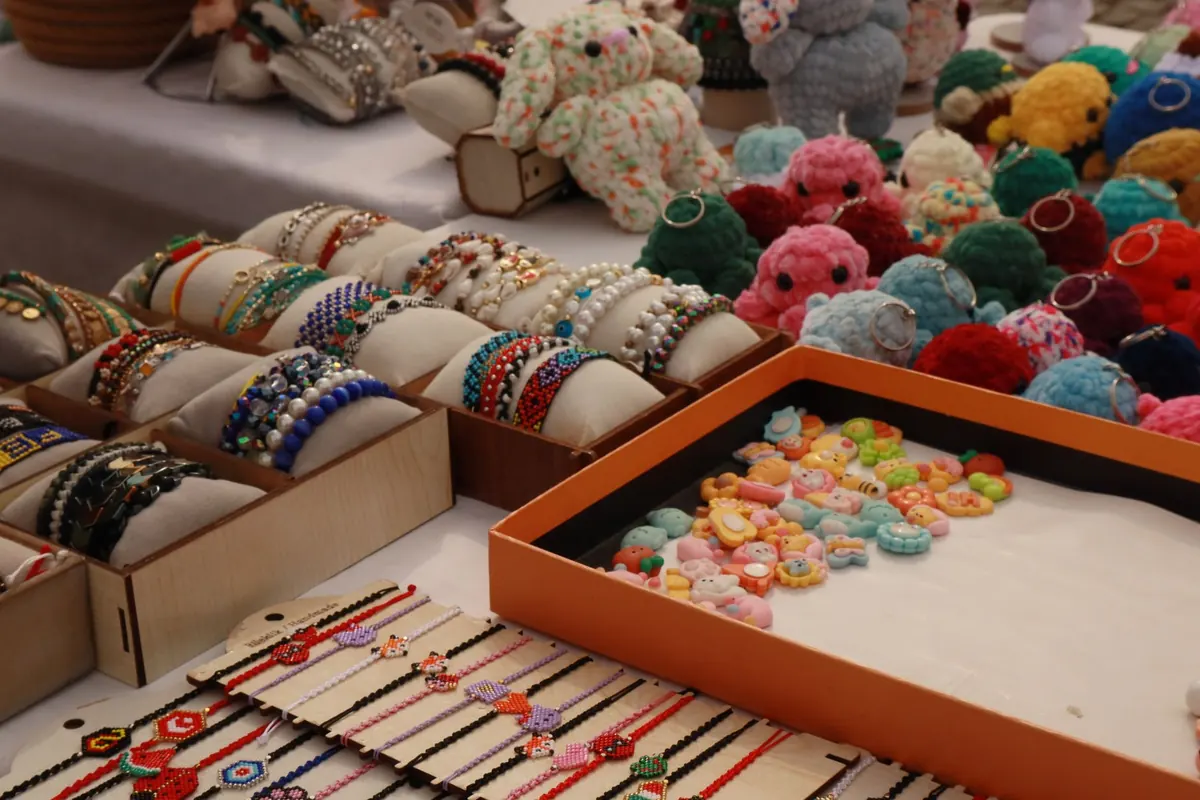
Photo: Büşra Demirci / Pexels
Related posts
More stories you’ll love reading